


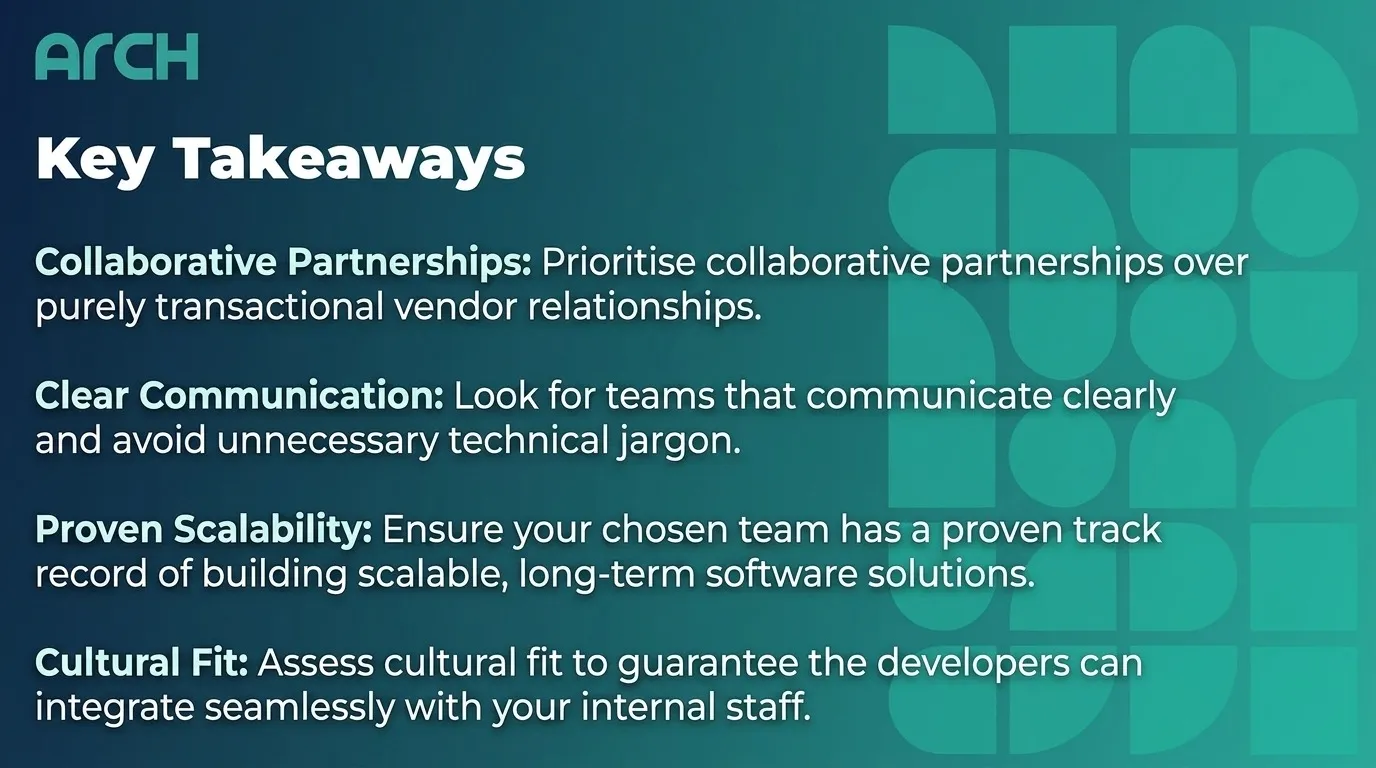
Key Takeaways
- Prioritise collaborative partnerships over purely transactional vendor relationships.
- Look for teams that communicate clearly and avoid unnecessary technical jargon.
- Ensure your chosen team has a proven track record of building scalable, long-term software solutions.
- Assess cultural fit to guarantee the developers can integrate seamlessly with your internal staff.
Navigating the Path from Concept to Code
Bringing a software concept to life requires more than just technical proficiency; it demands a strategic, hands-on partnership. In today’s fast-paced digital environment, selecting a development team is one of the most critical decisions a business can make. The right partner will not only write code but will deeply understand your broader commercial objectives.
Finding a team that integrates seamlessly with your internal operations can mean the difference between a scalable solution and a costly technical setback. You need professionals who communicate clearly, collaborate openly, and deliberately avoid hiding behind complex technical jargon. By focusing on alignment and shared goals, you establish a solid foundation for long-term digital success.
Identifying the Right Expertise for Scalability
When evaluating potential partners, it is vital to look beyond their basic portfolio and flashy presentations. You must assess whether they have genuine, verifiable experience in building software that can grow alongside your business. A solution that works perfectly for a hundred users might fail spectacularly when traffic scales to a million.
This is where applying rigour to your vetting process becomes absolutely essential. Asking detailed questions about their past projects, system architecture, and server management will reveal their true capabilities. You want a team that proactively anticipates scaling challenges rather than simply reacting to them after the fact.
To ensure your project’s success, partnering with experienced app developers who act as a direct extension of your team is paramount. This collaborative approach guarantees that technical decisions are consistently aligned with your overarching business goals. Furthermore, it fosters an environment where innovation thrives through shared expertise and mutual respect.
The Importance of Seamless Integration
The best development teams do not operate in an isolated silo away from your core business. Instead, they embed themselves within your organisation, learning your processes, analysing your data, and understanding user behaviour. This hands-on integration ensures that the final product truly reflects your brand’s vision and meets your specific operational needs.
Effective communication is the absolute cornerstone of this integration process. Regular updates, transparent reporting, and the use of accessible language help bridge the gap between technical and non-technical stakeholders. When developers speak your language, project management becomes significantly more efficient, predictable, and productive.
Evaluating Communication and Workflow
Before committing to a development partner, it is crucial to carefully test their communication style. Organise preliminary meetings to gauge how well they explain complex concepts to your leadership team. If they rely heavily on confusing jargon to answer straightforward questions, it is likely a red flag for future collaboration.
Additionally, you should align on project management methodologies early in the procurement process. Whether you prefer Agile, Scrum, or a bespoke hybrid programme, your development partner must be adaptable to your operational reality. A rigid workflow often leads to unnecessary friction, whereas a flexible, tailored approach promotes continuous progress.
Conclusion
Transitioning a project from a mere concept to robust, scalable code is a complex but highly rewarding journey. The secret to success lies in selecting a development partner who values collaboration, transparency, and clear communication just as much as technical excellence. By consciously prioritising these traits, businesses can secure software solutions that drive sustainable, long-term growth.
Ultimately, your custom software should be a powerful asset that constantly evolves with your company. Taking the time to properly evaluate and choose the right professionals ensures that your initial investment yields lasting commercial value. With the right integrated team by your side, navigating the complexities of digital product development becomes a confident, strategic stride forward.
Frequently Asked Questions
What is the most important factor when choosing a development team? While technical skill is essential, clear communication and the ability to integrate with your internal team are arguably the most crucial factors. A collaborative partnership ensures that the software programme aligns perfectly with your specific business goals.
How can I ensure the software built will be truly scalable? You should carefully review the development team’s past case studies to see how their previous projects have handled growth over time. Ask specific questions about their historical approach to database architecture, server infrastructure, and code maintainability.
Why should I avoid development teams that use heavy technical jargon? Excessive jargon can often mask a lack of genuine commercial understanding or be used to avoid transparent communication. A strong development partner will always be able to explain complex technical decisions in clear, accessible business terms.
Sources
- Harvard Business Review: The Impact of Collaborative IT Partnerships on Enterprise Growth
- Gartner Case Studies: Historical Analysis of Successful Software Scaling in Mid-Market Enterprises
- MIT Sloan Management Review: Analysing Communication Breakdowns in Software Engineering
- Forrester Report: Historical Data on App Development Success Rates
- McKinsey & Company: How Seamless Team Integration Has Driven Digital Transformation
